Solitaire: Relaxing Card Game
ECKERT GAMINGCasual
4.5241.00 Reviews
- Version
- 1.8.0
- Installs
- 100.00K
- Age Rating
- Teen
Screenshots
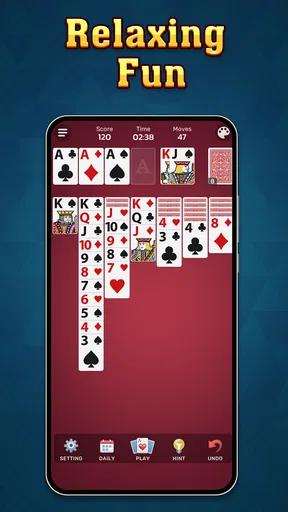
Our Review of Solitaire: Relaxing Card Game
 Analysis by Appyee
I reach for Solitaire: Relaxing Card Game when I want something familiar that starts immediately and does not demand a long commitment. It is a casual card game from ECKERT GAMING, built around the simple appeal of solitaire rather than a complicated progression system or a busy multiplayer environment. That focus is its biggest strength: I can open it, make a few decisions, and put it down without feeling that I have abandoned a larger task.
The game is free, aimed at a Teen audience, and has passed the 100K-install mark. Its average rating sits at 4.5 from around 1.4K ratings, with roughly 241 written reviews, so there is already a noticeable group of players using it regularly. The current version is 1.8.0, and it runs on Android 8.0 or later. Those details make it accessible to people using older compatible phones, although the real question is not whether solitaire is familiar. It is whether this particular presentation makes short, interrupted sessions pleasant enough to revisit.
Why the first few minutes work so well
The immediate appeal is easy to understand. Solitaire gives me a clear board, a small set of legal moves, and an objective I already know how to read. I do not need a tutorial-heavy introduction before playing, and I do not have to learn a fictional world, memorize abilities, or wait for another player. That makes the game a useful choice for the moments when I have only a little attention available.
That simplicity also gives the opening a clean rhythm. I can scan the visible cards, decide which move opens the most useful space, and continue from there. The pleasure is not in dramatic action; it comes from gradually exposing information and turning a crowded layout into an organized one. When the available moves line up, the game produces a quiet sense of progress that suits its relaxing identity.
I especially like this kind of design after a busy stretch of work or while waiting for an appointment. A short round gives my mind something concrete to do without asking me to become emotionally invested. The game is also easy to explain to someone who has never tried a digital card title: it is solitaire, presented as a compact escape rather than as a large gaming hobby.
There is an important trade-off here. Players who want constant novelty may find the opening too predictable. The rules are approachable because they are not overloaded, but that also means the first impression depends almost entirely on how satisfying the card decisions feel. If you need story, collection systems, competitive rankings, or a strong sense of unlocking new content, this will probably feel deliberately narrow.
A useful game for fragmented time
My best use for it is not a long evening session. It is the five-minute gap between other activities: waiting for food, sitting on public transport, or taking a short break when I do not want to start a larger game. Solitaire works particularly well in those spaces because one move can be meaningful even when the session is brief.
For example, I might open a round while waiting for a meeting to begin. I can make a few moves, stop when the meeting is called, and return later without needing to remember a plot or a complicated objective. That is a more valuable feature than it may sound. Many mobile games punish brief attention by filling the screen with tasks, timers, or rewards that need to be collected. A straightforward card layout respects the fact that the player may be interrupted.
The game also suits people who enjoy gentle mental sorting. It is not completely passive, because each move involves weighing immediate progress against the possibility of blocking a useful card. That small layer of planning keeps the experience from becoming mere animation. At the same time, it remains light enough for players who do not want a demanding puzzle.
One practical tip is to avoid moving a card simply because the move is available. I get better results when I first look for moves that reveal a hidden card or create a useful empty space. In solitaire, the most attractive move is not always the most helpful one. Treating each turn as a small information problem adds depth without making the game feel serious.
How the short-session rhythm feels
The strongest part of the experience is the balance between quick decisions and gradual development. A round can begin with obvious moves, then become more selective as the visible options shrink. That change keeps the game from feeling like a single repeated gesture. I am still playing the same familiar format, but my attention shifts from placing cards to preserving future possibilities.
This rhythm is better for casual play than for players seeking a high-pressure challenge. There is room to pause and think, and the game does not need to fill every second with activity. I can look over the layout, make a choice, and let the next state of the board guide me. That creates an easy loop: observe, move, reassess, and continue.
The downside is that solitaire can sometimes reach a point where the outcome feels determined by the arrangement rather than by my decisions. That is a normal tension in this type of card game, but it matters when judging replay value. A player who wants every loss to teach a clear lesson may find some rounds less satisfying. The appeal is more about the process of sorting and searching than about a perfectly transparent skill curve.
I recommend playing with a modest goal instead of treating every round as a test of mastery. Try to improve the quality of your choices, expose more of the layout, or simply complete a calm sequence of moves. That mindset makes the game more enjoyable during ordinary breaks and reduces the frustration that can come from expecting complete control over every outcome.
Returning after interruptions
Interruption tolerance is where this game earns its place on my phone. Solitaire naturally breaks into individual moves, so I do not feel trapped in a long sequence. If a message arrives or I need to put the phone away, the session has not been ruined in the same way it might be in a timed action game or a live match.
I would still treat it as a game for moments when I can give the board at least a little attention. The decisions are simple, but careless tapping can change the position and remove a useful option. It is forgiving as a casual activity, not entirely mindless background entertainment. That distinction is important for anyone choosing a game to play while multitasking.
The return experience is also helped by the absence of a complicated learning curve. After a break, I can understand the board again quickly. I do not need to recall a character build, a quest objective, or a sequence of controls. The visual language of solitaire does much of the work, which is one reason this format remains effective on mobile devices.
My advice is to stop at a natural point rather than forcing one last move when you know you are about to be interrupted. That small habit preserves the calm quality of the game. It also makes it easier to see your next decision when you return, instead of coming back to a position created by a rushed tap.
Where the format may frustrate
The same clarity that makes the game easy to resume can make it feel limited over time. There is no need to learn a new system, but there is also less protection against repetition. If you already play solitaire frequently, the basic structure may not offer enough surprise to replace a broader collection of card games.
This is also not the ideal choice for someone who wants a social reason to return. The appeal is personal and self-contained. Players looking for direct competition, shared goals, or a lively community would be better served by a multiplayer card game. Likewise, people who prefer puzzle games with handcrafted stages may enjoy a title with fixed challenges more than an open-ended solitaire loop.
Another consideration is the Teen content rating. That makes the game unsuitable for readers who are specifically searching for a title labeled for younger children. For adults and older teens who want a familiar card pastime, the rating is less of a concern, but parents should still check whether it fits their household’s expectations before handing over a device.
Because it is free, it is easy to try without making the decision feel significant. I see that as a good match for this genre: the game can earn its place through repeated small sessions rather than through a large upfront commitment. Still, “free” does not automatically mean it will suit everyone. The real cost for some players is attention, and a repetitive game needs to give enough quiet satisfaction to justify reopening it.
Replay value without pretending it is something else
Replay value here comes from the flexibility of the solitaire format. Each new layout asks me to read the available information again, and the order of moves can change how much of the board becomes accessible. That is enough to make another round tempting, especially when I feel I was close to a better solution in the previous one.
However, the game should be approached as a repeatable relaxation tool, not as an endlessly expanding adventure. Its strength is that it remains recognizable. I can return after several days and immediately understand why it appealed to me. Its weakness is that a player who needs constant new content may reach the limits of that appeal quickly.
One of the more useful ways to keep the experience fresh is to change the purpose of a session. Sometimes I play quickly and accept imperfect choices. At other times I slow down and examine whether a move opens information or merely rearranges what is already visible. This creates two different modes inside the same simple game: a soothing time filler and a small exercise in planning.
I also find it helpful to notice when I am playing automatically. Once the moves become mechanical, the game may no longer be providing the mental reset I wanted. At that point, taking a break is better than forcing more rounds. A casual game succeeds when it refreshes attention, not when it turns every spare minute into another obligation.
Compared with a physical deck, the digital version is more convenient because the layout is ready whenever I need it and the phone handles the repetitive card management. Compared with a large mobile card collection, it is more focused and less distracting. Compared with a competitive solitaire app, it may appeal more to someone who values a quiet pace than to someone motivated by rankings or performance targets.
That comparison helps define the audience. I would recommend it to a newcomer who wants a familiar card game without a steep entry point, to an older Android user whose device meets the minimum system requirement, and to anyone who prefers short, private sessions. I would skip it in favor of a richer alternative if I wanted multiple rule sets, a strong progression path, or a social layer that changes from day to day.
Small habits that improve the experience
My first practical suggestion is to scan for hidden-card opportunities before filling an empty space. Revealing new information usually gives the next move more value than making a tidy arrangement that does not change the board. This is a simple habit, but it makes the game feel more thoughtful almost immediately.
Second, I try not to judge a round too early. A quiet opening can still become interesting once a blocked column is opened. Conversely, an exciting start can leave fewer options later if I use the visible cards without considering what I might need next. Waiting one extra moment to compare two legal moves often produces a more satisfying session.
Third, I use the game as a deliberate transition rather than an automatic distraction. A single round after work can mark the end of the day, while a brief session before a task can help me settle my attention. If I open it every time I feel mild boredom, its calming effect becomes less noticeable. Used selectively, the uncomplicated format feels more rewarding.
These suggestions are not advanced mechanics hidden behind a complicated system. They are ways of getting more from the exact simplicity ECKERT GAMING chose. The game does not need elaborate features to offer a little depth; it needs the player to treat each move as a choice instead of tapping through the layout.
My casual verdict
After spending time with it, I see Solitaire: Relaxing Card Game as a focused, approachable option for players who want a dependable short-session card game. Its best qualities are immediate access, a calm pace, and the ability to tolerate interruptions better than many mobile genres. The familiar rules do not get in the way, and the free price makes experimenting easy.
The limitations are just as clear. The format is intentionally narrow, so anyone expecting a large feature set, social competition, or dramatic long-term progression should look elsewhere. Replay value depends on enjoying repeated decision-making, not on discovering a constant stream of new systems. Some rounds may also feel less rewarding when the available options seem constrained.
For me, the deciding question is whether I want stimulation or a reset. When I need a fast, readable activity that can fill a small gap and stop without ceremony, this game is a good fit. When I want a deeper puzzle, a stronger sense of achievement, or a reason to play with friends, I would choose a different title.
My recommendation is straightforward: try it if your ideal mobile game is quiet, familiar, and easy to leave and revisit. Keep your expectations centered on short sessions and modest replay, and the experience makes sense. It is not trying to reinvent solitaire, but as a free casual escape that gets to the card play quickly, it understands exactly why people still return to this format.
Verdict
Strengths of Solitaire: Relaxing Card Game
- Simple rules make it easy for beginners to start playing.
- Relaxing gameplay is suitable for short breaks or casual sessions.
- Playable offline, making it useful when you have no internet access.
- Multiple card layouts can add variety beyond the classic game.
- Customizable themes may improve visibility and personal enjoyment.
Limitations of Solitaire: Relaxing Card Game
- Some features may be locked behind ads or in-app purchases.
- Frequent advertisements can interrupt otherwise relaxing gameplay.
- Difficulty may feel limited for experienced solitaire players.
- Battery usage can increase during longer playing sessions.
- Progress or settings may not transfer easily between devices.
Other Releases by ECKERT GAMING
View All
BlockDown:Puzzle Games
Casual4.0

Solitaire Game:Classic Card
Puzzle4.6
Similar Picks in This Category
View All
My Talking Angela
Outfit7 Limited4.2

My Talking Tom
Outfit7 Limited4.3

Pou
Zakeh4.2

My Talking Tom 2: Pet Game
Outfit7 Limited4.3

Candy Crush Saga
King4.6

Bridge Race
Supersonic Studios LTD4.1
Frequently Asked Questions
What is Solitaire: Relaxing Card Game?
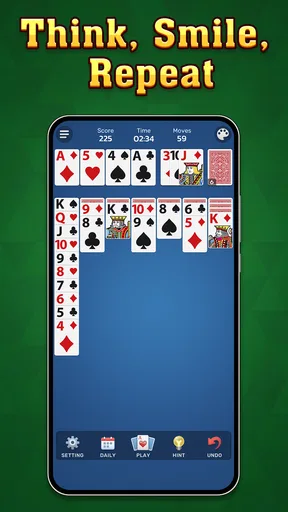
Solitaire: Relaxing Card Game is a digital version of the classic Klondike solitaire experience, designed for casual play and stress-free entertainment. Players arrange cards in descending order and alternating colors while building foundation piles by suit. The game is suitable for short sessions, whether you want to relax for a few minutes or enjoy a longer card-playing session.
Can I play Solitaire: Relaxing Card Game offline?
In most cases, the core solitaire gameplay can be enjoyed without a constant internet connection, which makes it convenient for travel, commuting, or areas with limited service. However, some features may require connectivity, including advertisements, cloud synchronization, daily challenges, rewards, updates, or purchases. It is best to open the game online at least once after installation so all available content can load correctly.
Is Solitaire: Relaxing Card Game free to download and play?
The game is generally available as a free download, allowing users to start playing without paying an upfront purchase price. Like many free mobile card games, it may include advertisements, optional in-app purchases, or premium features. Before downloading, check the store listing for the exact payment details, because ad removal, extra hints, special themes, or other enhancements may cost additional money.
Does the game include different modes, challenges, or customization options?
Solitaire: Relaxing Card Game may offer more than the standard classic mode, depending on the version installed and the developer’s current feature set. Common additions can include daily challenges, scoring systems, hints, undo options, card backs, backgrounds, and alternative visual themes. These features can make repeated games feel less predictable, although some may be unlocked through progress, advertisements, or optional purchases.
Is Solitaire: Relaxing Card Game suitable for beginners and older players?
Yes, the game is generally accessible to beginners because the rules are familiar, the controls are based on simple taps or drags, and helpful features such as hints and undo moves can reduce frustration. Larger cards and straightforward layouts may also make it comfortable for older players. Even so, device screen size, advertising frequency, and accessibility settings can affect the overall experience.
Play our best games!


